The Tom Lantos Human Rights Commission, which is co-chaired by congressmen James McGovern (D - MA) and Frank Wolf (R-VA), will hold a hearing on human rights and religious freedom in Morocco on Thursday June 17th, 2010.
The hearing will be open to the press and the public. The reason for the hearings, according to the commission, is the deportation of approximately 40 American citizens and scores of other foreign nationals on charges of proselytism, thus “it has raised serious concerns about the status of religious freedom in Morocco”.
The individuals deported, according to a statement from the commission, ran a wide array of humanitarian organizations, which provided services vital to the community. One of the organizations targeted was the Village of Hope, an orphanage that takes in children that have been abandoned by their parents.
A statement from the commission cited an article by Time Magazine that said, “The Village of Hope deportations are part of what appears to be a widespread crackdown on Christian aid workers in Morocco.”
Also cited, as an example is the Freedom House’s annual Freedom in the World Report, which noted “a backsliding in Morocco on a host of other democracy and human rights issues over the course of the last year”.
Thursday, June 10, 2010
Religious Freedom and National Security
Thomas Farr of The Washington Post blog, "On Faith" muses on the relationship between religious freedom and national security again.
He notes that:
He notes that:
"In a previous post, I voiced the fear that the Obama administration was placing U.S. international religious freedom (IRF) policy on the back burner, subordinating it to other less compelling administration priorities, or clearing the deck for initiatives that might be complicated by a robust defense of religious liberty abroad (such as outreach to Muslim majority countries or promoting international gay rights).
If it is true that President Obama and Secretary of State Clinton are backtracking on IRF, it would be somewhat ironic. The 1998 International Religious Freedom Act, passed unanimously by Congress, was signed into law by President Bill Clinton. It was implemented in the early stages by Secretary Madeleine Albright, who has since written a book calling for greater attention to religion in American foreign policy.
Moreover, as William Saunders and I observed in the Harvard Journal of Law and Public Policy, the Bush administration "did not make significant progress in reducing religious persecution or advancing religious freedom" during its eight years in power. If anything, international religious freedom declined under President Bush's watch, and President Obama was left with a real opportunity. In January 2009 IRF supporters were hopeful that the new administration would retool and reenergize U.S. religious freedom diplomacy.
But in the ensuing 16 months the administration has for the most part signaled its indifference to the issue."
Thursday, May 20, 2010
Iran: Opportunity for Accountability
Since Iran’s disputed June 12, 2009 presidential elections, human rights and religious freedom conditions have deteriorated to a point not seen since the early days of the Islamic revolution. Religious minorities–including Baha’is, various Christian groups, Sufi and Sunni Muslims, Zoroastrians, and Jews–are suffering increasing persecution and imprisonment while killings, arrests, and physical abuse have intensified for reformers, ethnic minorities, journalists, human rights defenders, women’s groups, and other activists. Religious as well as political dissidents are often tried on trumped-up national security crimes and other criminal charges of blasphemy, propaganda against the regime, and criticizing the Islamic Republic.
On June 10, two days before the one-year anniversary of the 2009 elections, the international community will have the opportunity to scrutinize Iran’s human rights record at the UN Human Rights Council (UN HRC) in Geneva. The review provides an opportunity for the United States and other member states to press for a resolution at the UN HRC condemning Iran’s severe human rights violations and to raise awareness and demand the release of prisoners of conscience.
To discuss these and related issues, the U.S. Commission on International Religious Freedom (USCIRF) is holding a press conference including Roxana Saberi, the Iranian-American journalist arrested in Iran in January 2009 on bogus espionage charges and sentenced to eight years in prison. During her 100 days in prison, Ms. Saberi shared a cell with other prisoners of conscience, including two female Baha’i religious leaders who have been incarcerated for two years on several baseless capital charges. Ms. Saberi’s new book “Between Two Worlds: My Life and Captivity in Iran” documents her experiences in Iran and provides the reader with a glimpse of Iran’s notorious Evin prison.
On June 10, two days before the one-year anniversary of the 2009 elections, the international community will have the opportunity to scrutinize Iran’s human rights record at the UN Human Rights Council (UN HRC) in Geneva. The review provides an opportunity for the United States and other member states to press for a resolution at the UN HRC condemning Iran’s severe human rights violations and to raise awareness and demand the release of prisoners of conscience.
To discuss these and related issues, the U.S. Commission on International Religious Freedom (USCIRF) is holding a press conference including Roxana Saberi, the Iranian-American journalist arrested in Iran in January 2009 on bogus espionage charges and sentenced to eight years in prison. During her 100 days in prison, Ms. Saberi shared a cell with other prisoners of conscience, including two female Baha’i religious leaders who have been incarcerated for two years on several baseless capital charges. Ms. Saberi’s new book “Between Two Worlds: My Life and Captivity in Iran” documents her experiences in Iran and provides the reader with a glimpse of Iran’s notorious Evin prison.
Thursday, May 6, 2010
India Remains on RF Watch List
India is among the countries which have been put on the ‘Watch List’ of a bipartisan US panel on global religious freedom, which termed its progress in protecting the rights of minorities as mixed.
Putting India on the ‘watch list’ for the second year in succession, the US Commission for International Religious Freedom (USCIRF) in its report said the Indian government at various levels recognized the problem of communal violence and created some structures to address these issues.
“However, justice for victims of communal violence was slow and often ineffective, thereby perpetuating a climate of impunity.
“While there was no large-scale communal violence against religious minorities during the reporting period, attacks on Christians and Muslims and their places of worship continued, along with incidences of intolerance against both,” it said.
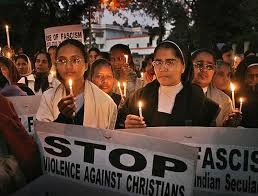
However, placing India on the ‘Watch List’ for the second year in succession by the Commission was not unanimous. One of the prominent members of USCIRF, Commissioner Felice D Gaer, USCIRF Chair last year, has written a long dissent note against such a decision of the body, which released its annual report running into more than 370 pages.
The recommendations of USCIRF are not binding on the US Government.
Notably, the members of the Commission were unable to visit India to have a spot assessment of the ground realities as they could not obtain a visa for the purpose - for the second consecutive year.
“Among its numerous policy recommendations, USCIRF urges the US government to integrate concern for religious freedom and related human rights into all bilateral contacts with India, and for US ambassador to India to speak out against, and seek to visit sites of, communal violence,” the report said.
“The Commission attempted to visit India, but no visas were granted,” it said.
Putting India on the ‘watch list’ for the second year in succession, the US Commission for International Religious Freedom (USCIRF) in its report said the Indian government at various levels recognized the problem of communal violence and created some structures to address these issues.
“However, justice for victims of communal violence was slow and often ineffective, thereby perpetuating a climate of impunity.
“While there was no large-scale communal violence against religious minorities during the reporting period, attacks on Christians and Muslims and their places of worship continued, along with incidences of intolerance against both,” it said.
However, placing India on the ‘Watch List’ for the second year in succession by the Commission was not unanimous. One of the prominent members of USCIRF, Commissioner Felice D Gaer, USCIRF Chair last year, has written a long dissent note against such a decision of the body, which released its annual report running into more than 370 pages.
The recommendations of USCIRF are not binding on the US Government.
Notably, the members of the Commission were unable to visit India to have a spot assessment of the ground realities as they could not obtain a visa for the purpose - for the second consecutive year.
“Among its numerous policy recommendations, USCIRF urges the US government to integrate concern for religious freedom and related human rights into all bilateral contacts with India, and for US ambassador to India to speak out against, and seek to visit sites of, communal violence,” the report said.
“The Commission attempted to visit India, but no visas were granted,” it said.
Subscribe to:
Posts (Atom)